blog
Weighted Pull-Ups: When and How to Add Load
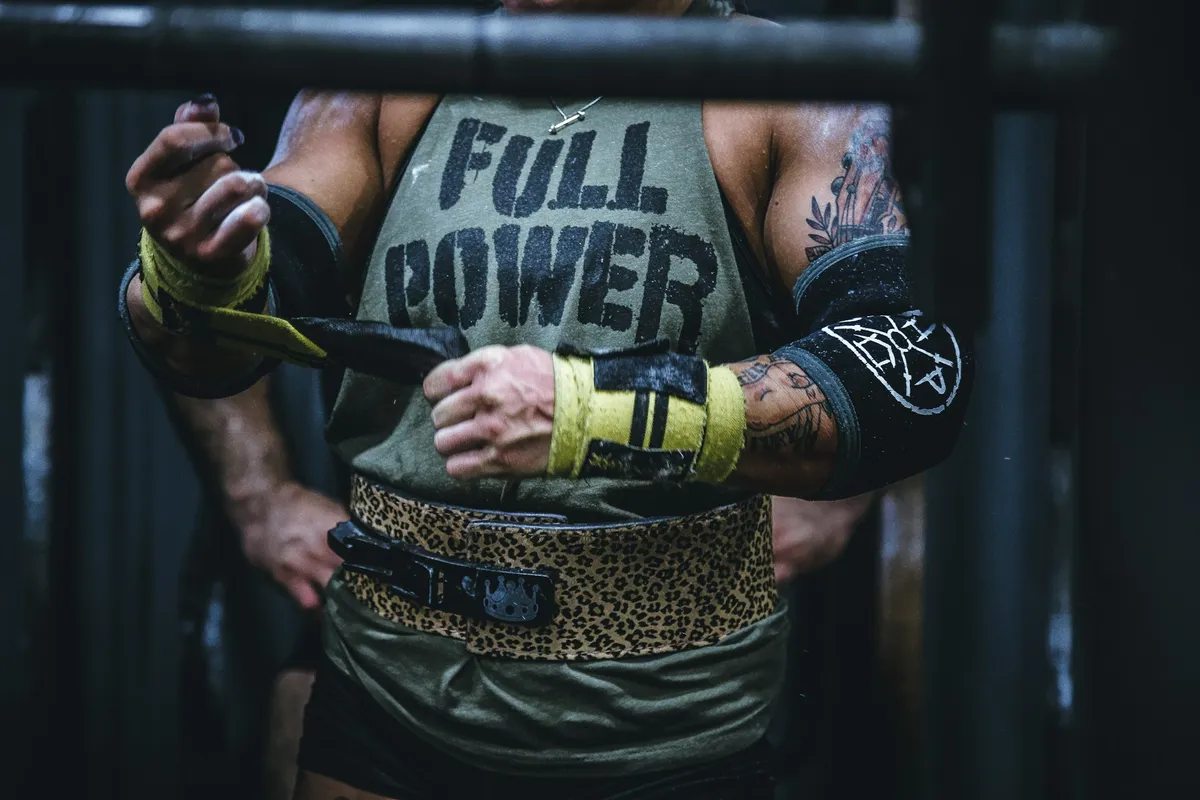
A weighted pull-up is a strict pull-up with external load added by a dip belt, a vest or a dumbbell between the feet. Add it once you can do about 8 to 10 clean bodyweight reps, then raise the load by 2 to 10 percent whenever you beat your rep target by 1 or 2.
 Say where you stand. CaliRep sets the target. coming soon
 What is a weighted pull-up?
A weighted pull-up is an ordinary strict pull-up with extra load hung on your body: a dip belt with plates on a chain, a weighted vest, or a dumbbell squeezed between the feet or knees. Nothing about the rep changes. Full dead hang at the bottom, chin over the bar, no kick, lowered under control, exactly the standard in how to do your first pull-up.
The reason it exists is arithmetic. A pull-up loads you with your own body weight and nothing else, and your body weight does not increase when you get stronger. Sooner or later the exercise stops being heavy, and at that point the only ways left to progress are more reps or more weight.
When are you ready to add weight?
You are ready when roughly 8 to 10 strict bodyweight reps are controlled, with the last rep of the set looking like the first. That number is a rule of thumb, and here is the reasoning behind it.
The American College of Sports Medicine position stand on progression recommends novices train with loads in the 8 to 12 repetition maximum range, and intermediate to advanced trainees across 1 to 12 repetitions with eventual emphasis on heavy loading. Once you can perform 10 or more bodyweight pull-ups, your body weight has dropped below that window: it has become an endurance load, not a strength load. Adding weight brings the exercise back into the range that builds strength.
Rhea et al. (2003) pooled 140 studies with 1,433 effect sizes and found untrained people gain most at about 60 percent of their 1 repetition maximum while trained people gain most at about 80 percent. That is the same point stated from the other direction. The better you get, the heavier the load has to be relative to your maximum, and bodyweight alone cannot follow you there.
If you are not at 8 to 10 reps yet, the answer is not weight. It is the rungs: inverted rows, negative pull-ups and band assisted reps, in that order.
How much weight should you add, and how often?
Add the smallest plate you own, then raise the load by 2 to 10 percent each time you beat your rep target by 1 or 2 reps. That second half is not a rule of thumb: it is the ACSM position stand’s stated progression rule, and it is the most useful sentence in this article.
| Your bodyweight best set | What to do |
|---|---|
| Under 8 strict reps | No weight yet; stay on the rungs |
| 8 to 10 strict reps | Add 2.5 kg, expect to drop to 5 or 6 reps |
| 5 to 8 reps at the current load | Stay; add reps |
| 1 or 2 reps above your target | Raise the load by 2 to 10 percent |
3 to 4 sets of 5 to 8 reps, 2 or 3 times a week, is the rule of thumb for the set scheme. The 4 sets come from Rhea et al. (2003), whose analysis put 4 sets per muscle group at the largest gains in both trained and untrained people. The frequency comes from Grgic et al. (2018), who pooled 22 studies and found strength gains rising from an effect size of 0.74 at 1 session a week to 0.93 at 3.
What actually drives the gain is the total work, not the single heaviest set. Peterson et al. (2011) followed 83 people through 12 weeks of progressive training and found total volume strongly associated with the increase in maximal strength, a standardised coefficient of 0.66 in men and 0.26 in women. A small plate added often beats a big plate added once.
Belt, vest or dumbbell?
A dip belt is the right tool above about 10 kilograms, because the load hangs on a chain below your hips and does not change the shape of the movement. A weighted vest is fine for smaller loads and leaves your hands free, though the weight sits on your torso and some vests ride up on the way down. A dumbbell between the feet or knees is the free option and the worst of the three: it swings, it demands ankle tension you do not want to think about mid set, and it falls.
| Method | Practical range | Trade-off |
|---|---|---|
| Dip belt | Anything above about 10 kg | Needs a belt and plates |
| Weighted vest | 5 to 20 kg | Can shift on the descent |
| Dumbbell between feet | Up to about 10 kg | Swings, and the grip on it fails first |
| Backpack with plates or books | Whatever fits | Load moves; fine for a first attempt |
Does added weight put your shoulders at risk?
Added weight raises a demand on the shoulder that is already high, which is why the strict rep comes first and the grip matters. Prinold and Bull (2016) tracked scapular movement in 11 regular pull-up trainees and reported that high arm elevation during pull-ups reduces the sub-acromial space and raises pressure there, and that the wide and reverse grips showed patterns linked to impingement risk. Urbanczyk et al. (2020) modelled muscle forces in 11 men and found the reverse grip put the largest proportional load on the rotator cuff.
Three practical consequences follow.
- Use a shoulder width overhand grip under load. The grip comparison is in chin-ups vs pull-ups; the wide and underhand versions are the ones the shoulder papers flagged.
- Set the shoulder blades before you pull. Youdas et al. (2010) recorded the rep being initiated by the lower trapezius, so the blade goes down before the elbow bends. That is the drill in scapular pull-ups.
- Never add weight to fix a bad rep. If the chin is not clearing the bar cleanly at bodyweight, load makes the compensation worse, not better.
Do you need to train to failure under load?
You do not. Robinson et al. (2024) ran a series of meta-regressions across the proximity to failure research and found the relationship with strength gain negligible, with only muscle size growing more when sets ended closer to failure. Leaving 1 or 2 reps in reserve is enough, and under load it is also what keeps the last rep from turning into a kick.
Weighted reps are 1 of several ways a pull-up gets harder, and where they sit among the others is in pull-up variations. They are past the beginner phase this site is mostly about, and I did not build them into CaliRep. The app takes the rep count you enter for pull-up, push-up and dip at your own body weight, 0 included, and a goal workout is 6 sessions ending in 1 attempt at a target computed from those numbers and held fixed until you reach it. That machinery is for getting to your first clean reps; the belt is what comes after. Where the sessions sit in a week is in the beginner calisthenics workout plan.
Questions people actually ask
When should I start doing weighted pull-ups?
When roughly 8 to 10 strict bodyweight reps are controlled, as a rule of thumb, and your form does not change in the last rep of a set. The American College of Sports Medicine's position stand puts novice loads in the 8 to 12 repetition range, and once bodyweight sits above that range the load is too light to keep driving strength.
How much weight should I add to pull-ups?
Start with the smallest plate you have, often 2.5 or 5 kilograms, and expect your reps to drop by several. The ACSM position stand recommends raising load by 2 to 10 percent once you can perform 1 or 2 repetitions over your target, which is the rule this article uses.
Do weighted pull-ups build more muscle than normal ones?
They keep the stimulus going once bodyweight stops being hard. Rhea et al. (2003) pooled 140 studies and found trained people gain most at about 80 percent of their 1 repetition maximum, against 60 percent for untrained people. Once your bodyweight is well under that share of your maximum, load is how you get back to it.
Belt, vest or dumbbell for weighted pull-ups?
A dip belt for anything over about 10 kilograms, because it hangs the load below your hips and does not change how you move. A vest suits smaller loads and keeps your hands free. A dumbbell between the feet or knees works but tends to swing, and the grip on it fails before your back does.
Can weighted pull-ups hurt your shoulders?
Added load raises a demand that is already high. Prinold and Bull (2016) found high arm elevation in a pull-up reduces the sub-acromial space, and Urbanczyk et al. (2020) found the underhand and wide grips load the rotator cuff most. Add weight only on a shoulder width grip with a strict rep, and never to fix a rep you cannot already do clean.
How many sets and reps for weighted pull-ups?
3 to 4 sets of 5 to 8 reps, 2 or 3 times a week, as a rule of thumb. Rhea et al. (2003) found 4 sets per muscle group produced the largest gains in both trained and untrained people, and Grgic et al. (2018) found gains rising up to 3 sessions a week.
Should I do weighted pull-ups to failure?
No need. Robinson et al. (2024) ran meta-regressions across the research on proximity to failure and found a negligible relationship with strength gain, though muscle size did grow more with sets taken closer to failure. Leaving 1 or 2 reps in reserve keeps the form clean under load.
References
- American College of Sports Medicine position stand: progression models in resistance training for healthy adults (Med Sci Sports Exerc, 2009)
- A meta-analysis to determine the dose response for strength development (Rhea et al., Med Sci Sports Exerc, 2003)
- Progression of volume load and muscular adaptation during resistance exercise (Peterson et al., Eur J Appl Physiol, 2011)
- Surface electromyographic activation patterns and elbow joint motion during a pull-up, chin-up, or Perfect-Pullup rotational exercise (Youdas et al., J Strength Cond Res, 2010)
- Scapula kinematics of pull-up techniques: avoiding impingement risk with training changes (Prinold and Bull, J Sci Med Sport, 2016)
- Avoiding high-risk rotator cuff loading: muscle force during three pull-up techniques (Urbanczyk et al., Scand J Med Sci Sports, 2020)
- Exploring the dose-response relationship between estimated resistance training proximity to failure, strength gain, and muscle hypertrophy (Robinson et al., Sports Med, 2024)
- Effect of resistance training frequency on gains in muscular strength: a systematic review and meta-analysis (Grgic et al., Sports Med, 2018)